
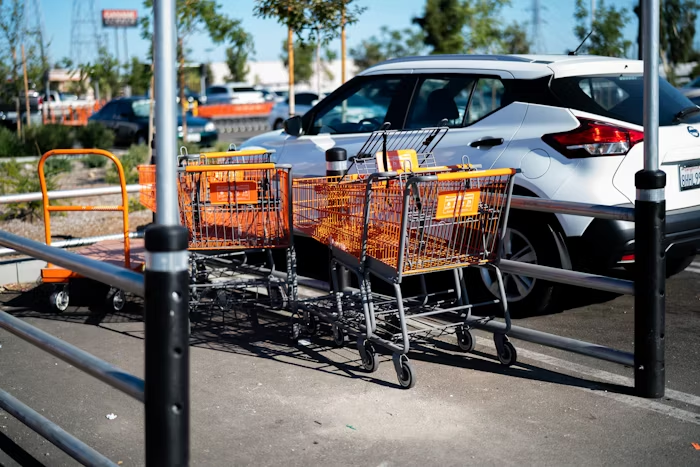
I have been a tad sidelined for the past week or so. Looking for a rabbit hole or two, I go back to this whole idea of a consumer economy. 70% of our GDP is devoted to stuff of one form or another. We produce things. The the public at large has to use tehm in one way or another. We rely on this hamster wheel of buying to keep us all afloat. I keep wondering, how this came to be?
Let’s go back about three hundred years or so. Everything was handmade of a sort. The cottage industries of furniture, textiles and food were meant to provide what we needed to live and not much more. If you were rich and famous or noble you could get the good stuff. Since they just hung out by themselves they did not have to impress anyone beyond their fellow courtisans. The poor people had no friggin clue what fancy was.
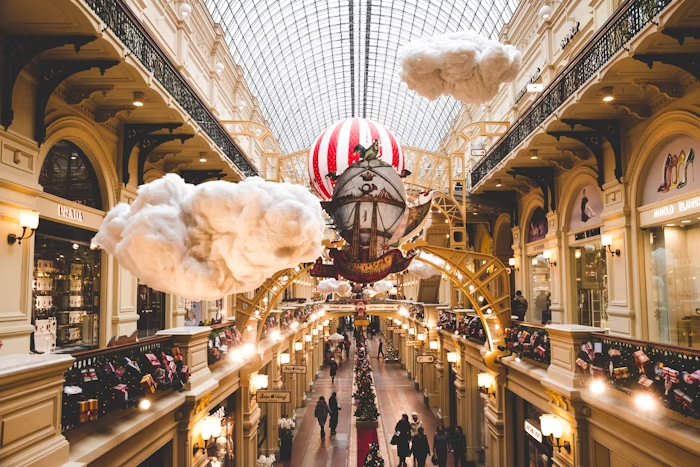
Now along comes the Industrial Revolution which had its beginnings in England and spread in quick fashion to Europe. You no longer dealt in onesies and twosies in all aspects of life. Making tons of stuff required a new type of marketplace. In the early 19th century we had the advent of department stores that had acres of indoor space to introduce people to the finer things of life. Even if you could not afford it, you could “window shop” and dream.
The ultimate fairy tale dream maker was the Sears and Roebuck catalog. People everywhere, from the cities to rural America, were enticed by page upon page of things. Clothes, tools, toys, and even houses could be purchased and delivered right to your doorstep. This was starting to get good.
The early twenties were heady times. Cities were growing, and people didn’t have to work 12-hour days, six days a week. This thing called leisure time had to be filled with movies, radios, and better eats, even in the sticks. Assembly lines brought down costs and more and more folks were increasing their wealth by serving this buying public.
With the machines running 24/7 there was a lot of stuff. The trick now was to keep them buying. Enter PR and advertising. Daily newspapers, weekly magazines and the proliferation of radio were just what the doctor ordered. The Madison Avenue gang came to be and there was a little band of psychologists that came up with a variety of ways to tweek your buying neurons. They were also proferring a new concept, buying on credit. What a country.
Hold that thought for awhile. Unfortunately, a little thing called 1929 and The Great Depression came along. Banks that had been lending money hand over fist, failed. Factories slowed down, and workers were laid off. But interestingly, there was a large demand for cheap goods. Prices went back to levels of 1913 and 1914.
The promotion boys were still hard at work. Entertainment provided a cheap way to take your mind off things, and of course, there were ads everywhere. They introduced the concept of envy. Not of higher classes but just a small slab of your world. Keeping up with the Joneses’ became the maxim and people did all they could to be the first one on the block.

During WWII things were tight with rationing and the war effort but the 50’s and 60’s provided the urge to buy after being cooped up for so long. The role of status and fashion came to the fore. Cars, clothes and even furnishings changed from year to year. The “latest” were defined by some genius somewhere and we as a buying public ate it up….and still do.
Things no longer last a lifetime but have a planned obsolescence. You can buy a set of golf clubs this year that are the latest and greatest and next year they are yesterday’s news. Ties are wide and then thin and then no ties at all. TVs and streaming bring the theater to you. Sound systems, ear buds, EV’s and even booze require one to constantly be on their toes, lest you fall behind.
Here is where it gets interesting. Are we inherently envious and desirous, or are we being persuaded into this way of living? There are business moguls who consider the masses to be idiots. Sheep to be led. There are others who consider the ability to buy to be the ultimate freedom for an individual. I buy because I can and that’s it.
I have spoken before of depression and its main symptom, a lack of self-esteem. An advertising exec told me once that his job was to exploit that fault.
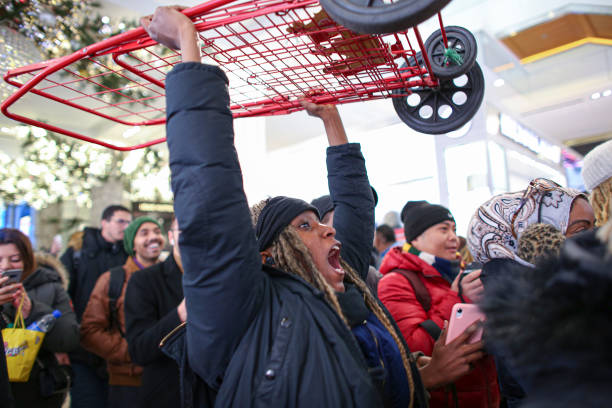
If you don’t drink the right beer or drive the right car, you will be considered a loser. If you have the latest and greatest, you are a worthwhile person who has made it. If not, you will probably be left out of everything that is fun. FOMO, Fear of Missing Out, is the worst trick our minds can play on us.
All of this might sound mundane. Get a grip, TTG. It’s life. Yes, it is, but when our economy relies 70% on its perpetuation, what happens when the hamster slows down from exhaustion or, even worse, dies? It just seems to me to be a house of cards of a sort. We are being battered by Mother Nature all over our country and the world as well. Are we in for another type of storm? Could it be consumerism? Good question.
As always
Ted The Great
Factoids:
In the US, digital media is expected to account for over 77% of total ad spend in 2024, with online advertising revenue reaching an estimated $252.8 billion
Big Pharma spends about $95 billion on research and $18 billion on ads per year. We are one of only three countries in the world that advertise drugs.
There are 6-8 ads during NFL timeouts and possession changes.
The average person in the United States is exposed to between 4,000 and 10,000 ads per day. This number includes ads from traditional media, like TV and radio, as well as digital platforms like social media, search engines, and websites.
There are 300,000 items in the average American home. Our homes have tripled in size over the last 50 years. The US has over 50,000 off-site storage facilities. There is 7.3 square feet of storage for every human being. We buy 53 items of clothing in a year. Party on kids!
Being a minimalist means you value yourself more than material things. It means making decisions based on what you need instead of getting everything you want. It does not mean the things you buy are cheap. It means they are something you need, regardless of how much they cost. Interesting.

 Ted's Head
I have too much stuff. I have an off-site storage facility. But what brings me pleasure: Books. Music. My firepit and splitting wood by swinging a maul. Watching football and basketball. Talking to my kids and grandkids. Puttering in the yard.
Things? Not so much.
He who dies with the most toys is not the winner.
Make smaller footprints.
Tony Duerr
Right on brother. Thx Ted